Skip navigation

Using DataParser

dataparserCreating and implementing compliance and security procedures is a tough task – from identifying data at risk to choosing the right archive and implementing supervision and eDiscovery procedures. Even the data collection is not a uniform process. There can be data source limitations or infrastructure variables that out-of-the-box connectors cannot support. DataParser provides valuable options for data management with customizable connectors and flexible deployments. 

The Typical Use Case: Daily Data Collection for Archiving

The most common use case for DataParser is daily collection of users’ chats and files directly from data sources like Microsoft Teams, Slack, Webex, Zoom and Bloomberg. Sending this data each day into corporate archives and blob storage systems for compliance and business requirements.  Daily processed data flows into the archive and downstream systems used for eDiscovery. Policies and procedures in place ensure regulations are met and the data is governed accordingly.


Special Projects


DataParser is a flexible solution that extends well beyond routine daily collection. It gives clients multiple ways to process and manage data sets, including historical and custom collections, data migrations, and targeted eDiscovery requests.

Historical Data Collections


“We were moving to a new archive and wanted to bring our Slack data in to merge with new policies. We’ve never collected our Slack data but we’ve been using chat and meetings for the last few years. DataParser processed all our back data from Slack and the 17a-4 Support Team handled everything. It worked perfectly for our use case.” – DataParser Client


Data Source Migrations


“Our firm was moving off Cisco Jabber onto Microsoft Teams and we needed to collect both data sources during the transiton of users from one platform to the other. To further complicate the project we were also moving to M365 Purview from our old Global Relay archive. DataParser made both migrations seamless –  and throughout the entire project, 17a-4 Support was there to answer any questions.” – DataParser Client

Custom Data Collections


“Our General Ledger was backed up onto an on-premise SQL database and we wanted to move this procedure to Azure Blob storage to streamline management and get rid of on-premise servers. We used DataParser’s SQL module to accomplish this task.  It was simple and effective!” – DataParser Client


eDiscovery Requests


“On occasion our lawyers will ask us to pull chats from our Zoom and Webex platforms for specific users. We use DataParser for this task since it’s easy to use and offers a low cost option. We can process the data and send it to a SharePoint library that we share with Our outside counsel. It really couldn’t be easier.” – DataParser Client

The DataParser Process

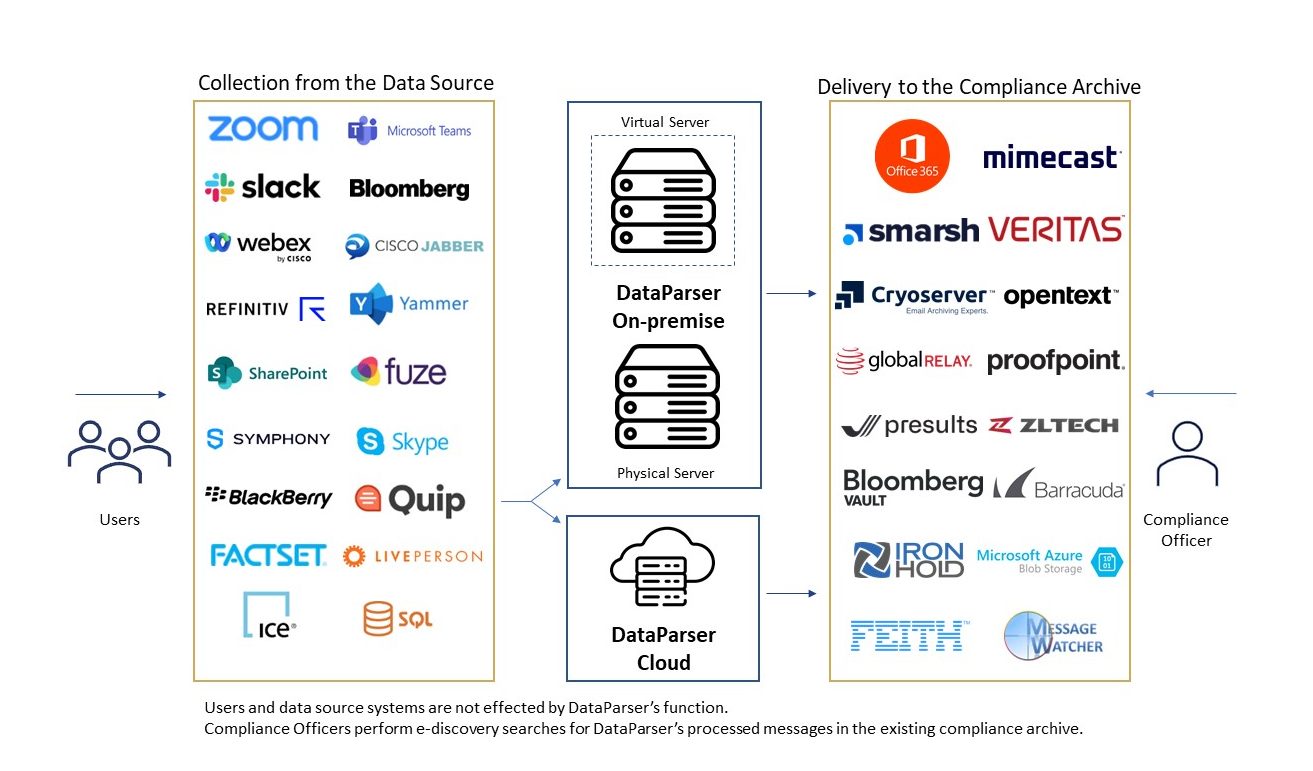
DP Process


dataparser hub

DataParser connectors never disrupt users’ activities on any data source platform. Capturing data shouldn’t interrupt your work. DataParser collects from source APIs, exports and databases.
The ability to deliver to any archive, storage or eDiscovery system means procedures and archive queries can remain the same. The same policies in use for email and other data in the archive can now be applied to the newly ingested data types. With all processes and workflows intact, the only adjustment is reviewing the new data. Formatting applied by DataParser ensures the data looks just as it did in the source system.
Compliance teams typically perform eDiscovery in email archives and repositories, but DataParser is also an excellent solution for one-off data collections and eDiscovery requests for legal matters. The ability to configure collections for specific data types and filtered user groups makes DataParser a useful tool for responding to in-house or outside counsel. Regulators often request data with specific parameters so the ability to target a user at a specific time on a specific platform can be more effective than searching the archive and culling through much more data.