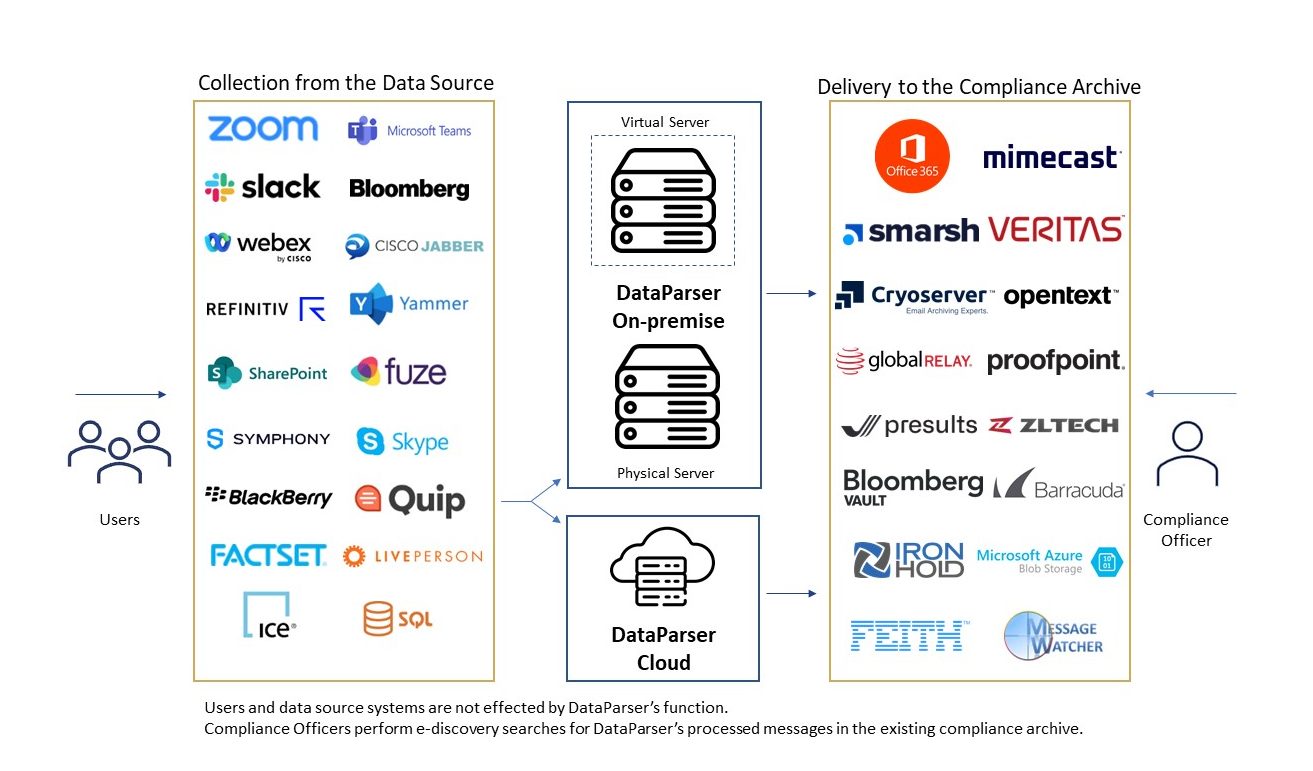
The Typical Use Case: Daily Data Collection for Archiving
The most common use case for DataParser is daily collection of users’ chats and files directly from data sources like Microsoft Teams, Slack, Webex, Zoom and Bloomberg. Sending this data each day into corporate archives and blob storage systems for compliance and business requirements. Daily processed data flows into the archive and downstream systems used for eDiscovery. Policies and procedures in place ensure regulations are met and the data is governed accordingly.

 Creating and implementing compliance and security procedures is a tough task – from identifying data at risk to choosing the right archive and implementing supervision and eDiscovery procedures. Even the data collection is not a uniform process. There can be data source limitations or infrastructure variables that out-of-the-box connectors cannot support. DataParser provides valuable options for data management with customizable connectors and flexible deployments.